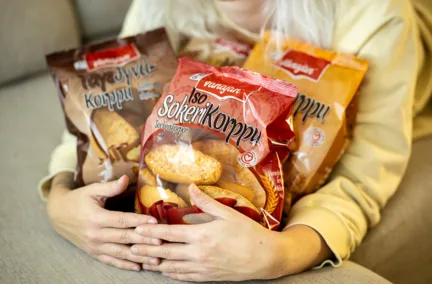
Vanajan Keksit Oy is a Finnish bakery known for its delicious biscuits, wafers and crisp rolls. While our treats may steal the spotlight, there’s plenty happening behind the scenes, too. From ingredient sourcing and making use of production waste to improving energy efficiency, we work to develop the way we bake. Our sustainability strategy draws on the United Nations Sustainable Development Goals (SDGs), helping us identify areas for improvement.
Our Sustainability Efforts ARE Aligned with the UN Goals
SDG 2: Zero Hunger
At Vanajan, we aim to minimize food waste and promote a circular economy. Production waste and by-products are either reused in our products or directed to animal feed or bioenergy production. For example, crumbs and imperfect pieces from waffle production are used in the creation of new products, with allergen contamination, traceability, and other food safety aspects carefully considered. By making use of production waste and by-products, we aim to reduce material waste in our bakery operations.
We continue to invest in technologies and processes that optimize resource use and further reduce waste.
SDG 3: Good Health and Well-Being
Vanaja promotes consumer well-being by offering healthier options in selected product categories. Currently, our range includes products with the Heart Symbol, which meet strict nutritional criteria for salt, sugar, and fats. Our goal is to expand this selection and bring more products to the market that support well-being and encourage healthy lifestyles.

SDG 8: Decent Work and Economic Growth
Vanajan’s commitment to responsibility begins with the sourcing of raw ingredients. We are developing a supplier code of conduct to define our expectations regarding working conditions, environmental practices and responsible sourcing. Additionally, we aim to source as many ingredients as possible domestically. While ingredients like cocoa are exceptions, we choose local alternatives whenever possible.
We said no to palm oil over a decade ago.
SDG 12: Responsible Consumption and Production
We pay attention to how our products are made and packaged. We use Rainforest Alliance certified cocoa and removed palm oil from our recipes over a decade ago. Our plastic packaging can be sorted into plastic packaging collection, where collected materials can be processed into recycled plastic raw material. We continue to look for ways to improve our production processes and packaging choices.
SDG 13: Climate Action
We understand the food industry’s critical role in combating climate change, which is why our climate efforts focus on reducing energy consumption, utilizing renewable energy sources, and optimizing resource use. Reducing our carbon footprint begins with accurate measurements.
In 2025, we calculated our Scope 1 and Scope 2 greenhouse gas emissions for the first time, using 2024 as our baseline year. The results help us understand emissions from our own operations and purchased energy, and plan measures to reduce them.
Responsible Baking through Certified Processes
Our responsible operations also include ensuring food safety and quality in our products. The foundation of our work is high-quality practices guided by EU food legislation and other legal requirements, as well as the BRCGS food safety standard. Our food safety efforts are monitored by independent third parties and authorities.
We work to develop our environmental practices by monitoring our operations, identifying areas for improvement and planning practical measures.